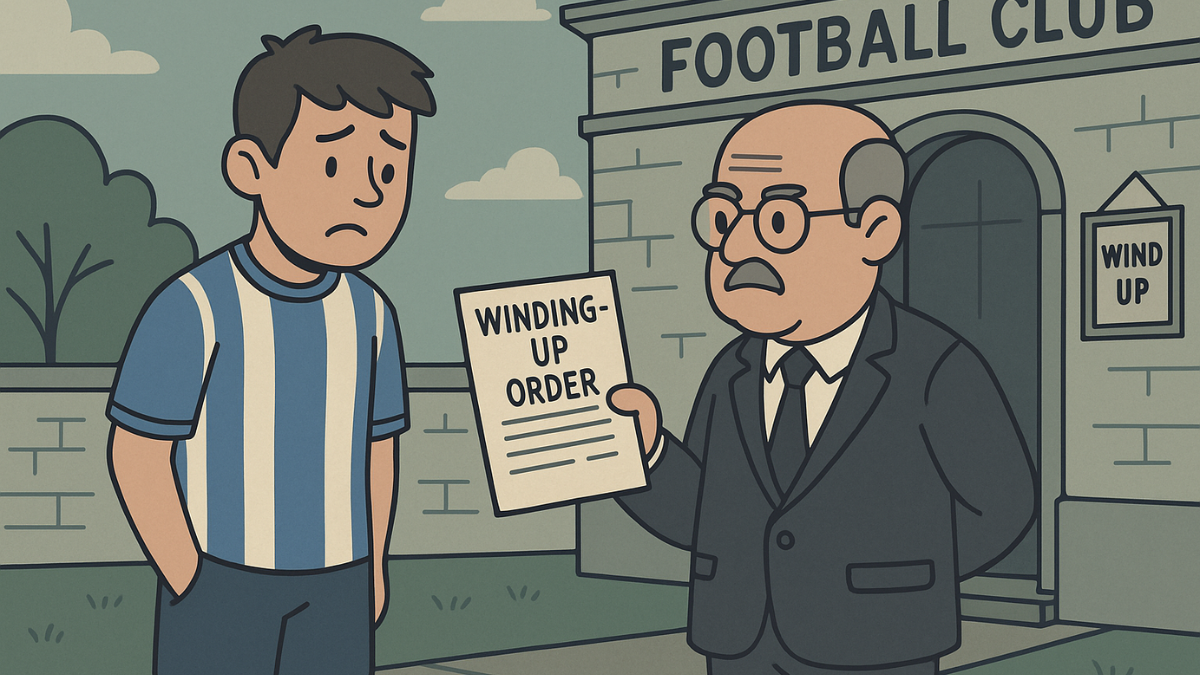
Financial trouble is nothing new in English football, and over the past decade we’ve seen more and more clubs pushed to the brink over unpaid tax or outstanding debts. But when headlines mention a “winding-up petition” or a “winding-up order”, what does that actually mean for a football club – and at what point is the club truly in danger of disappearing? For Sheffield Wednesday supporters trying to understand the legal and practical consequences, the difference between a petition and an order is huge.
When a creditor (most commonly HMRC) believes a club is not paying what it owes, they can apply to the High Court for a winding-up petition. This is the beginning of the process, not the end of the road.
Once the petition is issued:
- The court sets a hearing date (usually 6–10 weeks later).
- The petition becomes a matter of public record.
- Other creditors can “join” the petition if they are also owed money.
- The club’s bank accounts are often restricted, making day-to-day operation harder.
At this stage, the club is still fully salvageable. The owners can:
- Pay the debt in full,
- Negotiate a repayment plan,
- Dispute the debt in court, or
- Enter administration before the hearing to protect the club from liquidation.
This is why supporters often hear of clubs scrambling to find funds “before the hearing date”. Administration is typically used as a shield — it hands control to an administrator, triggers a points deduction, but prevents compulsory liquidation.
What if the club does nothing?
If the hearing arrives and the debt has still not been resolved, HMRC or the creditor will ask the judge to issue a winding-up order.
This is the major turning point.
Once a winding-up order is granted:
- The club is legally placed into compulsory liquidation.
- Control is taken away from the owner immediately.
- The Official Receiver or a liquidator takes over.
- The club is no longer a going concern – it is being dissolved.
Crucially:
After the order is made, it is too late for administration.
This is why most clubs that survive do so before the hearing, not after.
How this matters for Sheffield Wednesday
For a club like Wednesday, the stakes are simple:
| Stage | What it means | Can the club be saved? |
|---|---|---|
| Petition | Warning stage – unpaid debt formally lodged with the court | ✅ Yes |
| Hearing | Last chance – must pay, settle, or enter administration | ✅ Yes |
| Winding-up order | Court enforces liquidation | ❌ No |
Supporters often assume that a winding-up order is just another step before administration, but legally it is the reverse: administration only protects a club if it happens before the order is made.
This is why news of a petition doesn’t automatically mean the club is finished — but it does mean the clock is ticking. Once the order is handed down, the football club’s company is effectively over unless a rescue takeover is already in place or the court agrees to a delay.
In short, a winding-up petition is an urgent financial alarm bell, while a winding-up order is the legal point of no return. Understanding the difference matters for any supporter who wants to know what stage of danger a club is genuinely in. If you saw Sheffield Wednesday reach this point, would you want the owners to fight the petition, or would you prefer administration if it meant protecting the long-term future of the club?
Note
This article is provided for informational purposes only and reflects the understanding of the process at the time of publication. It should not be taken as legal advice, and no claims beyond verified public information have been made.